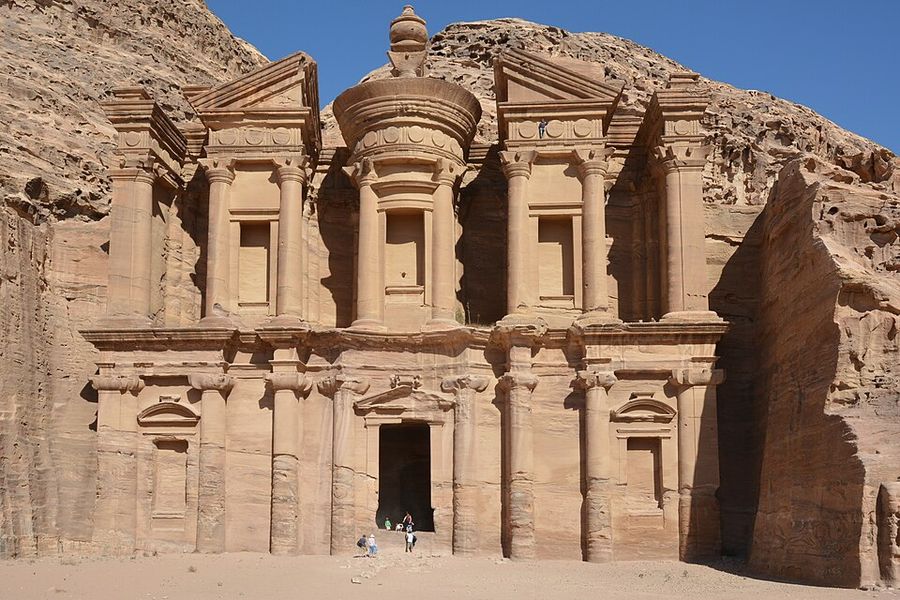
Photo: Azurfrog, CC BY-SA 3.0 Source

Petra
I have been hereSign in to keep track of the places you have been.I want to go hereSign in to keep a list of places you want to visit. Travel advice: Be aware of safety risksParts of this country have stricter advice: Travel only if necessaryAdvice from the Dutch government. Always read the current advice before you travel.Last changed: 08-09-2026Read the current advicePetra is an ancient city and archaeological site in southern Jordan. Famous for its rock-cut architecture and water conduit systems, Petra is also called the "Rose City" because of the colour of the sandstone from which it is carved. The city is one of the New 7 Wonders of the World and a UNESCO World Heritage Site. The area around Petra has been inhabited from as early as 7000 BC, and was settled by the Nabataeans, a nomadic Arab people, in the 4th century BC. Petra would later become the capital city of the Nabataean Kingdom in the second century BC. The Nabataeans invested in Petra's proximity to the incense trade routes by establishing it as a major regional trading hub, which gained them considerable revenue. The Nabataeans were able to survive the desert due to efficient rainwater collecting and desert farming. Petra flourished in the 1st century AD, when its Al-Khazneh structure, possibly the mausoleum of Nabataean king Aretas IV, was constructed, and its population peaked at an estimated 20,000 inhabitants.
Source: Wikipedia, CC BY-SA